
Slip Resistance Flooring Rating? What is it & How To Test? Anti-Slip Tiles Rating R9, R10, R11, R12, R13. Non-Slip Resistant Tiles For Bathroom, Toilet, Shower, Kitchen & Wet Rooms.
Slip Resistance Flooring.
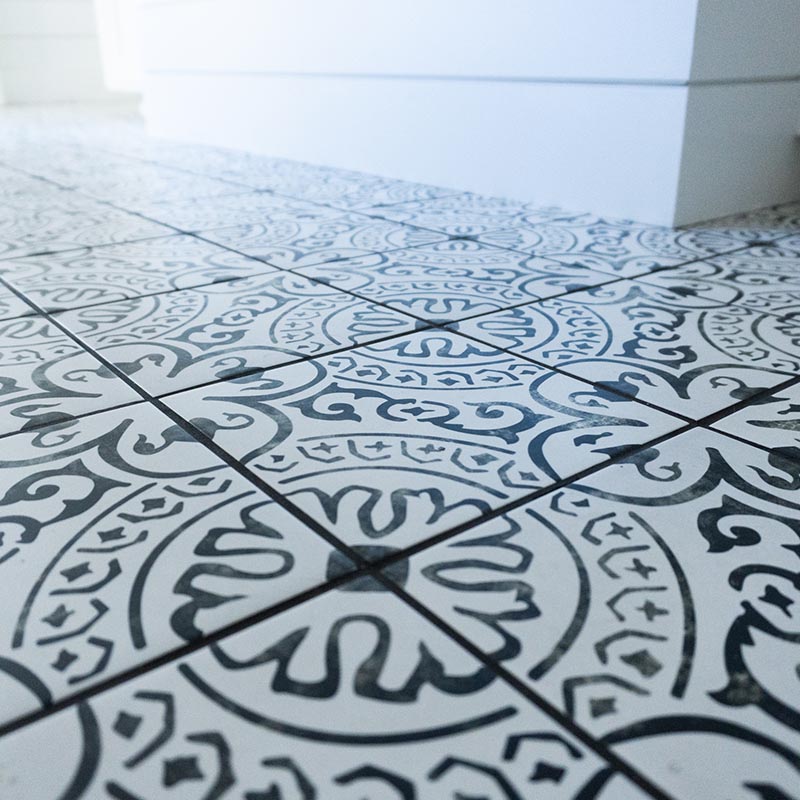
Slip-resistant flooring such as slip-resistant tiles or anti slip tiles are commonly classified into R9, R10, R11, R12 and R13 according to the level of slip resistance. R9 provides the lowest level of slip resistance, while R13 provides the highest level within this classification. Selecting the appropriate tile surface and finish is therefore important for reducing the risk of slipping, particularly in areas exposed to water, oil or other contaminants.
The R rating is determined using the ramp test, where a person wearing standard safety footwear walks on the test surface while the surface is contaminated with a specified testing medium, typically oil. The test platform is gradually inclined until the operator reaches the maximum safe angle before slipping. The angle achieved is used to determine the R classification.
Slip Resistance Rating For Tiles.
Slip Resistance Classification. R9-R13.
R9 6°–10°
Low Dry indoor areas, offices, general interiors.
R10 >10°–19°
Moderate Kitchens, toilets, entrances, retail areas.
R11 >19°–27°
Good Wet areas, commercial areas, workshops.
R12 >27°–35°
High Industrial areas, commercial kitchens, areas exposed to grease.
R13 >35°
Very high Heavy-duty industrial and high-risk wet/contaminated areas.
The actual slip performance of a floor can vary significantly depending on whether the surface is dry or wet, as well as the type and amount of contaminant present, such as water, oil, grease, soap or other liquids. Therefore, the R rating should be considered together with the intended use, cleaning conditions, drainage, slope and expected contaminants.
For projects where slip resistance rating is critical, the flooring should be tested by an appropriately accredited laboratory using the applicable test standard. A test report should state the test method, test conditions, surface condition and resulting classification so that the suitability of the flooring can be properly assessed.
Important: R9–R13 is specifically a ramp-test classification and should not automatically be treated as a universal measure of slip resistance under every wet-floor condition. For wet pedestrian areas, additional tests such as the pendulum test may be appropriate depending on the applicable Singapore/project standard.
Wet and Dry Slip Resistance Pendulum Test.
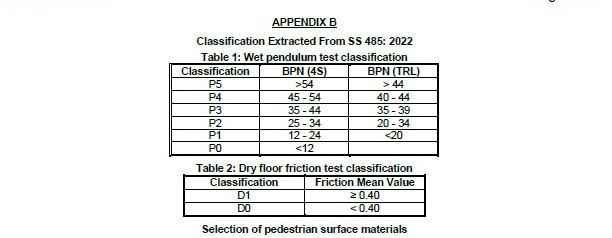
Slip resistance testing is carried out to assess the potential risk of slipping on pedestrian flooring under different surface conditions. The testing can generally be divided into wet slip resistance testing and dry floor friction testing, depending on the intended application and environmental conditions.
Wet Slip Resistance Pendulum Test.
The wet pendulum test is used to assess the slip resistance of pedestrian surfaces when wet. The test simulates the interaction between a pedestrian’s footwear and the flooring surface under wet conditions.
The classification ranges from P0 to P5, with P0 representing the lowest level of wet slip resistance and P5 representing the highest level. The appropriate classification should be selected according to the location, expected level of water exposure and potential risk of slipping.
Wet pendulum testing is particularly relevant for areas such as bathrooms, shower areas, toilets, kitchens, swimming pool surrounds, balconies, entrances and other areas where the floor may become wet.
Dry Floor Friction Test.
The dry floor friction test is used to assess the frictional characteristics of flooring under dry conditions. It is particularly relevant for internal floors and areas that are normally maintained in a dry condition.
The dry classification ranges from D0 to D1, with D0 representing a lower level of dry floor friction and D1 representing a higher level. The required classification should be considered based on the intended use of the floor and the conditions under normal operation.
Both wet and dry slip-resistance tests provide useful information when selecting flooring materials. However, the test result should always be considered together with the location, surface finish, cleaning regime, footwear, water or contaminant exposure and expected maintenance conditions.
Slip-resistance testing can be carried out by specialist testing laboratories using the applicable standards and test methods in Singapore. A formal test report should identify the test method, test conditions, flooring sample or location, and resulting slip-resistance classification.
How to Choose Slip-Resistant Flooring
Choosing the right floor finish is important to ensure both slip resistance and ease of maintenance. The selection should consider whether the area is normally dry or wet, the level of foot traffic, and the type of contaminants that may be present.
Glossy or polished finishes are generally more suitable for areas that remain dry, such as living rooms, bedrooms, offices and other low-moisture areas, where the risk of slipping is relatively low. These smooth surfaces are also easier to clean and maintain.
Matt or honed finishes are generally a better consideration for areas that are frequently exposed to water or moisture, such as bathrooms, shower areas, toilets, kitchens, balconies and other wet areas, where a higher level of slip resistance is required.
However, when selecting a surface finish, it is important to understand the balance between slip resistance and ease of cleaning. Highly textured or rough surfaces may provide greater slip resistance, but they can also be more difficult to clean and maintain because dirt, dust, grease, soap residue and other contaminants can accumulate within the surface texture.
This is particularly important in bathrooms, showers and kitchens, where water, soap, shampoo, cooking oil and grease may be present. If these contaminants are not properly removed, they can affect the surface performance and potentially increase the risk of slipping over time.
Therefore, the most slip-resistant floor is not always the most practical choice. The flooring should be selected according to the specific application, considering safety, surface texture, cleaning requirements, expected contaminants, durability and long-term maintenance.
Simple Tests to Check Slip Resistance
1. Simple Wet Foot Test.
Wet the floor with clean water or soapy water and step on it with your full foot, applying pressure similar to normal walking. Slowly move your foot to check whether the sole slides easily. Always hold onto a stable support and take extra care to avoid slipping or falling.
2. Simple Wet Palm Test.
Apply clean water or soapy water to the surface. Place your full palm firmly on the wet surface and apply pressure. Check whether the palm slides easily across the surface.
Important Safety Note.
Take extra care when carrying out any slip test. Wet or soapy surfaces can become very slippery. Hold onto a secure support and never test on a surface where you may lose your balance or fall.
Also, a tile that feels rough or highly textured does not necessarily mean that it will provide good slip-resistant when wet. Actual slip resistance can vary when water, soap, oil or other contaminants are present. Therefore, the surface should be assessed under the conditions in which it will actually be used.
Testing with soapy water can provide a useful indication for bathrooms, showers and kitchens, where soap, shampoo or other contaminants may be present. However, these simple tests are only an indication and should not replace a standardised slip-resistance test.
Disclaimer: The simple tests described above are for general observation only and should not be considered a professional or standardised measurement of slip resistance. Wet or soapy surfaces can be hazardous. Always take appropriate safety precautions and, where a formal assessment is required, engage a qualified testing laboratory to carry out the applicable slip-resistance test.
Have Peace of Mind.
Therefore, it is important and essential to enhance the grip and slip resistance of flooring, especially in wet areas at home, commercial premises, industrial facilities and public spaces. Even when anti-slip tiles are selected, further treatment may be considered to enhance the surface grip and provide additional slip resistance where required.
YHH provides non-slip treatment using a clear nano anti-slip solution for tiles designed to greatly increase the slip resistance of flooring while maintaining the appearance of the surface. It is suitable for various types of tiles, including marble, granite, terrazzo, quartz, ceramic, porcelain, mosaic, stoneware, homogeneous tiles, glazed, glossy and polished tiles and many more.
For wooden surfaces, YHH also provides anti-slip spray to enhance surface grip while maintaining the appearance of the material. For other materials, anti-slip paint and coating solutions are available for surfaces such as metal, aluminium, steel, vinyl, laminate, fibreglass, acrylic and more.
Learn how to protect yourself and your loved ones, especially the elderly, seniors, persons with disabilities and young children. By taking appropriate measures to reduce the risk of slip and fall accidents.
Enhance the grip. Improve safety. Have peace of mind.

Well-rated with glowing anti-slip treatment reviews on social media.
YHH Best Posts & Updates.
How To Prevent Slippery Floors.
Tips To Maintain a Cleaner Floor Tiles.
Importance Of Slip, Fall and Trips Hazards.
How To Choose Slip Resistant Flooring.
What is Nano Anti-Slip Floor Treatment?
Why Anti Slip Coating is A Must For Bathrooms At Home?
Anti Slip Flooring For Dogs, Pet-Friendly Non Slip Ideas
Actress Joanne Peh injured her back after slipping in the bathroom.
Former WP chief Low Thia Khiang conscious and recovering in icu after fall at home.
Frequently Asked Questions (FAQs).
1. Can anti-slip treatment be applied to existing tiles?
Yes. Anti-slip treatment can be applied to many existing tile surfaces, including marble, granite, terrazzo, quartz, ceramic, porcelain, mosaic, stoneware and homogeneous tiles. It can enhance the surface grip without the need to replace the existing flooring.
2. What about wood and other non-tile surfaces?
For wooden surfaces, an anti-slip spray and paint can be used to enhance surface grip. For other materials such as metal, aluminium, steel, vinyl, laminate, fibreglass and acrylic, suitable anti-slip paint or coating solutions may be considered depending on the surface and application.
3. Does anti-slip floor treatment guarantee that the floor will never be slippery?
No. Non-slip treatment is intended to enhance surface grip and reduce the risk of slipping, but no flooring or treatment can completely eliminate the risk of slip and fall accidents. Actual performance can vary depending on water, soap, oil, contaminants, footwear, cleaning and maintenance. For critical areas, professional slip-resistance testing is recommended.
YHH PLUS ENTERPRISE
Have questions about anti-slip treatment, flooring slip resistance or suitable surface solutions?
Contact YHH to discuss your flooring requirements and find the right solution for your application.
Enhance the grip. Improve safety. Have peace of mind.
Contact us today for more information or a consultation.
Address: 58 Ripley Crescent Singapore 556234
Email: sales@antislipsolution.sg
 Hi, click Whatsapp us below, we will respond asap