
Slip Resistant Treatment For Tiles and Epoxy Flooring Paint. Anti-Slip For BTO, HDB Residential, Commercial & Industrial. Floor Safety Singapore.
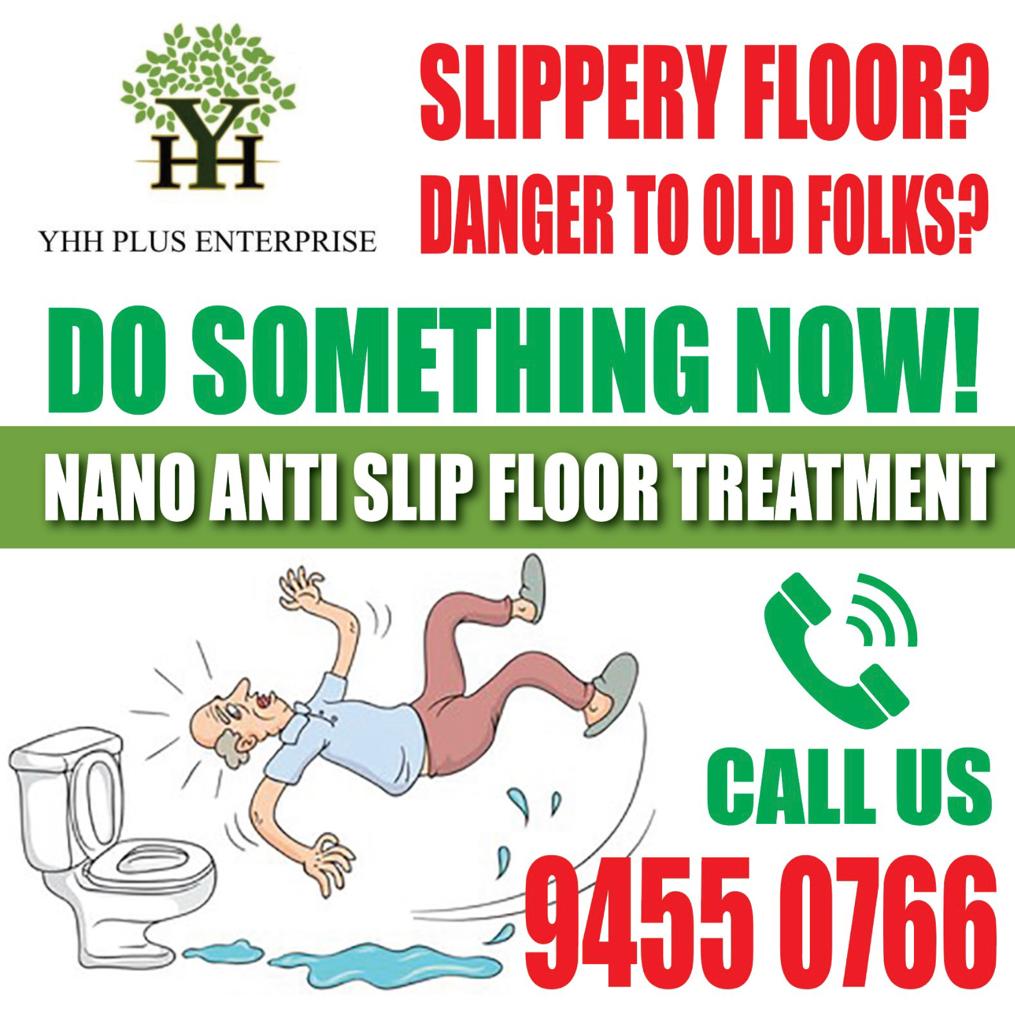
Slip Resistant Tiles & Epoxy Flooring:
How to Make Them Less Slippery.
Slip resistant tiles, also known as anti-slip or non-slip tiles, are commonly available with slip ratings such as R9, R10, R11, R12 and R13. Epoxy flooring is typically made by combining epoxy resin with a hardener and can be installed as a single or multi-layer flooring system.
Depending on the application, epoxy floor coatings may include anti-slip agents, flakes, pebbles, aggregates or other additives to improve surface traction.
Slip-resistant tiles and epoxy flooring are widely used in HDB homes, private residences, commercial buildings, industrial areas and outdoor spaces, including concrete floors, stairs, slopes, ramps, swimming pool areas and decking.
However, anti-slip tiles and epoxy floors can still become slippery, especially when the surface is wet or contaminated with soap, shower foam, body wash, shampoo, dirt or other residues.
Wet bathrooms, showers and toilets are common areas where slips and falls can occur. The risk can be particularly serious for elderly people, seniors and young children.
This is why choosing anti-slip flooring alone may not be enough. Understanding the root causes of slippery floors and maintaining good surface traction are important parts of floor safety.
Here are four important factors to consider when making slip-resistant tiles and epoxy flooring less slippery.
1. Floor Surface and Anti-Slip Texture.
A rough or textured floor surface does not automatically mean it is completely slip-resistant.
Anti-skid tiles, matte tiles, non-slip epoxy paint and epoxy flake flooring can provide additional texture, but the floor may still become slippery when exposed to water and especially soapy water.
For wet areas, it is important to consider how the flooring performs under actual wet conditions—not just how rough the surface feels when dry.
Good floor safety also requires proper cleaning and maintenance to prevent soap, dirt and other contaminants from reducing surface traction.
2. Ease of Cleaning and Maintenance.
Matte and textured anti-slip tiles can offer better traction than smooth, glossy tiles. However, highly textured or porous surfaces can also make cleaning more difficult.
Dirt, stains, soap residue, algae and other contaminants can accumulate in textured tiles and epoxy surfaces. Over time, this build-up may affect the cleanliness and traction of the floor.
Therefore, when choosing slip-resistant tiles or epoxy flooring, consider both slip resistance and ease of cleaning.
A flooring surface that is easier to clean and maintain can help reduce the accumulation of contaminants that contribute to slippery conditions.
3. Floor Cleaner and Detergent.
The wrong floor cleaner or detergent can also contribute to a slippery floor.
Some cleaning products may leave a residue or film on the flooring surface after washing. On textured anti-slip tiles or epoxy flooring, this residue can remain within the surface texture and affect traction.
Always use a floor cleaner suitable for your specific tile or epoxy flooring and follow the manufacturer’s cleaning recommendations.
Proper cleaning is important—not only to make the floor look clean, but also to help maintain its slip-resistant performance.
4. Nano Slip Resistant Treatment.
If your anti-slip tiles, epoxy flake flooring or epoxy floor paint are still slippery when wet, a suitable anti-slip treatment may provide an additional solution.
YHH Nano Slip-Resistant Treatment is designed to enhance surface traction on suitable flooring, including surfaces affected by wet and soapy conditions.
The treatment can be considered for existing flooring where replacing the tiles or epoxy system may not be practical.
By improving the slip resistance of suitable flooring surfaces, nano anti-slip treatment can be an option for bathrooms, showers, toilets, pool areas, stairs, patios, decking and other wet areas.
Conclusion: How to Make Anti-Slip Flooring Less Slippery.
Having slip resistant tiles or epoxy flooring does not automatically mean the floor will never become slippery.
For better floor safety, consider:
* Choosing suitable slip-resistant flooring
* Considering wet-condition performance
* Selecting flooring that is easy to clean
* Using the correct floor cleaner and detergent
* Removing soap, dirt and other surface contaminants
* Maintaining the flooring regularly
* Considering a suitable nano slip-resistant treatment for existing slippery floors
If your non-slip tiles, anti-slip tiles or epoxy flooring are still slippery, YHH can help you explore a suitable nano anti-slip solution to improve floor traction.
Contact YHH today to find out how our nano slip-resistant treatment can help make your existing flooring safer and less slippery.
YHH Anti-Slip Resistant Coating Singapore.
YHH Plus Enterprise specializes in anti-slip resistant coating, anti-slip paint and non-slip spray in Singapore for toilets, tiles, epoxy flooring and other suitable surfaces.
Our clear nano anti-slip coating is designed to improve floor traction, especially on wet and soapy surfaces, while maintaining the appearance of suitable flooring. It is suitable for indoor and outdoor applications.
YHH also provides anti-slip coating for tiles, as well as anti-slip paint and non-slip spray solutions for suitable epoxy, concrete, flake flooring, wood, vinyl, laminate, metal, aluminium, fiberglass, acrylic and synthetic surfaces.
The right anti-slip solution depends on the flooring material and application. Suitable surfaces can also be cleaned and retreated when slip resistance gradually decreases due to dirt, contamination or wear.
Don’t wait for a slip-and-fall accident. Contact YHH Plus Enterprise today for the right anti-slip coating, paint or spray solution for safer flooring.

Check out for more pictures, videos and anti-slip tile treatment reviews. Highly-rated with 5 stars trusted reviews.
YHH Best Post & Updates.
How To Prevent Slippery Tiles.
Tips To Maintain a Cleaner Floor Tiles.
Importance Of Slip, Fall and Trips Hazards.
How To Choose Slip Resistant Tiles Flooring.
Anti-Slip Coating For Marble, Granite, Glazed & Gloss Tile.
Types of Floor Coating & Floor Paint Singapore.
Types of Overlay, Bathroom Epoxy Flooring & Spray.
What is Nano Anti-Slip Floor Treatment?
Why Non-Skid Coating is A Must For Toilet At Home?
Non-Skid Flooring Ideas For Dogs, Pet-Friendly Non Slip Products.
3 Home Hazards You May Face and How to Address Them.
4 Tips on How to Clean Anti-Skid Tiles At Home.
Understanding The Value Of Anti-Slip Treatment For Wet floors At Home.
Types Of Non-Skid Flooring For Indoor & Outdoor Areas.
Anti Slip Flooring Ideas For Bathroom, Shower Tray & Bathtub.
Non Slip Bathroom Flooring Elderly, Seniors, Disabled For Safety.
Slip Resistant Treatment Singapore – FAQs
1. Is the slip resistant treatment safe for pets, dogs, elderly, seniors and toddlers?
Yes. The treatment is designed to be safe for homes with pets, dogs, elderly, seniors and toddlers when properly applied.
2. Can I brush and scrub the tiles?
Yes. You can brush and scrub the tiles as normal. Regular cleaning and maintenance help maintain the slip resistance.
3. Will the slip resistant treatment peel off?
No. It is not a conventional thick coating, so it will not peel off like paint or surface coatings.
4. How long does the treatment take?
The treatment has an immediate effect. One HDB bathroom can usually be treated in around 1 hour, and the flooring can be used once the treatment is completed.
5. How long can the slip resistant treatment last?
With proper maintenance and cleaning, the treatment can last many years. If slip resistance gradually reduces over time, the floor can be cleaned and the treatment reapplied.
YHH PLUS ENTERPRISE
Have slippery bathroom or toilet tiles? Contact YHH Plus Enterprise today for a professional slip resistant treatment in Singapore and make your flooring safer for your family and loved ones.
Address: 58 Ripley Crescent Singapore 556234
Email: sales@antislipsolution.sg
 Hi, click Whatsapp us below, we will respond asap
Recent Comments