
Best Types of Epoxy Overlay Flooring, Paint, Epoxy Pebbles, Epoxy Flakes. Floor Paint, Coating, Spray & Anti-Slip Tiles. Floor Safety For BTO, HDB Bathroom, Toilet, Shower & Kitchen.
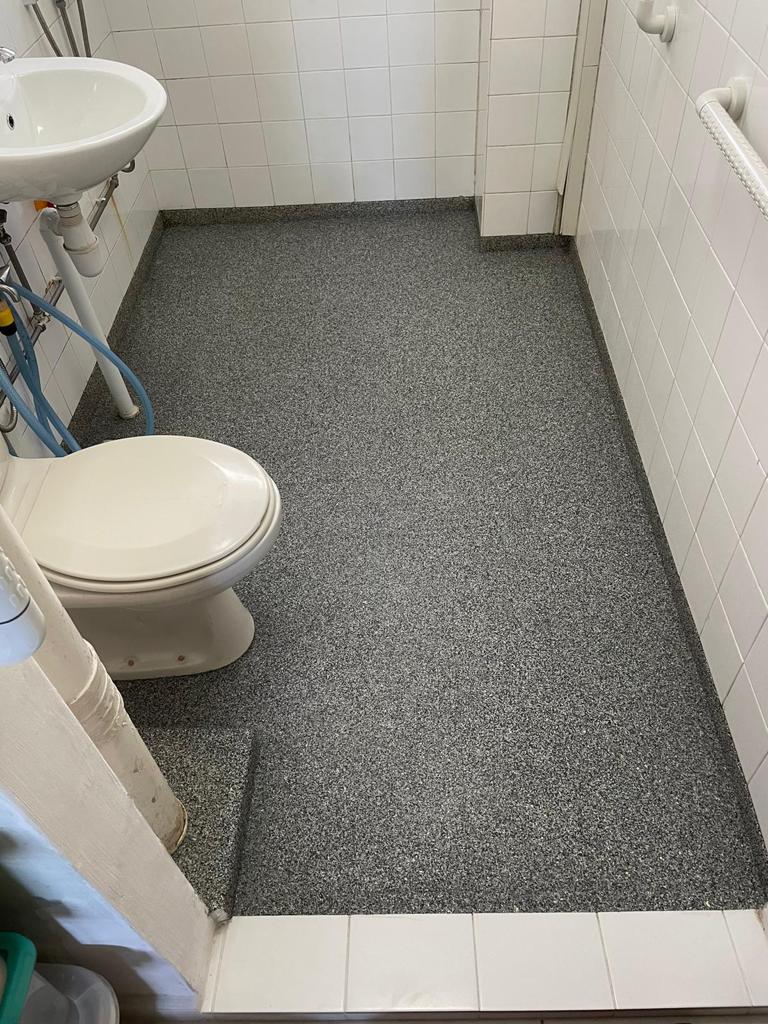
Bathroom & Toilet Flooring: Epoxy Overlay, Epoxy Flooring, Tiles & Floor Coating.
When it comes to bathroom and toilet flooring, there are various methods available to replace, resurface, or overlay existing floors and tiles to achieve a fresh and updated appearance. However, appearance is only one factor to consider. The flooring should also be comfortable, durable, easy to maintain, water-resistant, and equipped with suitable anti-slip properties to provide better safety on wet and soapy surfaces.
Different flooring solutions including epoxy floor paint, tile overlays, floor coatings, spray systems, and flooring tiles have their own unique characteristics, advantages, limitations, and maintenance requirements. These factors determine their suitability for use in bathrooms and toilets, where floors are regularly exposed to water, moisture, soap, cleaning chemicals, and heavy daily use.
Choosing the right flooring system therefore requires more than simply considering its colour, texture, or appearance. Factors such as slip resistance, durability, waterproofing, ease of cleaning, surface preparation, installation method, and long-term maintenance should also be taken into account.
This article explores the different types of epoxy floor overlays, floor coatings, floor paints, spray finishes, and tile flooring solutions available for bathrooms and toilets, including their characteristics, benefits, limitations, and suitability for wet areas.
Epoxy Overlay: Epoxy Flakes Flooring & Pebbles.
Epoxy floor coatings are a popular choice for many residential, commercial, and industrial spaces. They are also commonly used for bathroom and toilet floors due to their seamless finish, durability, and toughness. Normally, an epoxy coating consists of a two-part mixture made from epoxy resin and hardener.
Different epoxy systems undergo a chemical reaction when the resin and hardener are mixed, forming a hard and durable surface coating. Epoxy coatings are generally resistant to chemicals, abrasion, and impact, allowing them to withstand regular use and heavy foot traffic.
However, smooth epoxy flooring can be extremely slippery when wet, especially in bathrooms and toilets where water, soap, shampoo, and other residues are present. This is why additives such as different sizes of flakes, chips, and pebbles can be incorporated into the epoxy coating. These materials provide additional surface texture and help increase traction on wet bathroom floors.
Lastly, the epoxy coating should be easy to clean and maintain to prevent the accumulation of stains, dirt, soap residue, and other bathroom contaminants. These residues can contribute to a slippery surface if they are not removed regularly. The ease of cleaning is therefore an important factor when selecting an epoxy flooring system for bathrooms and toilets.
The removal of epoxy coating is also another factor to consider. Over time, the coating may fade, wear, peel, or deteriorate depending on usage and site conditions. Removing the existing epoxy coating can be difficult and may require additional surface preparation before a new flooring system can be installed.
Epoxy Overlay – Floor Paints.
The most common types of floor paints used for bathrooms and toilets include acrylic enamel paint and latex paint. Primers are often applied to the floor surface beforehand to provide better adhesion and achieve a smoother and more even finish.
Acrylic enamel paints are a versatile type of paint that can be used in a wide range of environments, including homes, offices, and retail spaces. They are able to withstand moisture and humidity, making them suitable for certain bathroom and toilet applications. Acrylic enamel paints are also available in different colours and finishes, including matte, semi-gloss, and high-gloss.
Latex paints provide a more cost-effective option for floor coating applications. They are generally suitable for areas with low foot traffic. As they are water-based, latex paints are relatively easy to apply, clean, and maintain. Latex paints can also resist moisture and are available in a wide range of colours and finishes, including matte, satin, and gloss.
However, as bathroom and toilet floors can consist of different types of surfaces and tiles, the durability and suitability of each paint can vary. It is therefore highly recommended to seek professional advice to determine which type of floor paint, primer, and coating system is most suitable and durable for the existing floor surface.
Microcement Floor Overlay.
Microcement is a popular flooring solution for bathrooms and toilets as it can be applied over certain existing surfaces, including tiles and concrete. It provides a seamless, modern, and minimalist finish with minimal grout lines.
Microcement is available in various colours and finishes, including matte and satin, and can create a smooth decorative appearance. With fewer joints, it is also relatively easy to clean and maintain.
For bathroom use, proper surface preparation, waterproofing, sealing, and anti-slip treatment are important to ensure durability and safety on wet and soapy surfaces.
As different floor and tile surfaces require different preparation methods, it is recommended to seek professional advice to determine whether microcement is suitable for the existing bathroom or toilet floor.
Epoxy Overlay – Metallic Floor Coating.
Metallic epoxy is a decorative flooring system that uses metallic pigments to create a glossy, seamless, and three-dimensional finish. It is available in various colours and patterns, including marble and flowing effects.
Its seamless surface makes it easy to clean and maintain, with fewer grout lines for dirt and soap to accumulate. However, smooth metallic epoxy can become slippery when wet, so an anti-slip additive or textured topcoat is recommended for bathrooms and toilets.
Proper surface preparation and sealing are important for achieving good durability and moisture resistance.
Overlay or Hacking of Tiles.
One of the most popular methods for bathroom and toilet flooring is to overlay new tiles or vinyl flooring over the existing floor. This can be a more cost-effective option as it avoids the need to hack and remove the existing tiles. There are many types of flooring tiles available in the market, including porcelain, homogeneous, ceramic, and mosaic tiles.
For bathrooms, it is highly recommended to choose matte or textured finishes rather than glossy surfaces, as they generally provide better traction when wet. Tiles with suitable slip-resistance ratings, such as R10 to R11, can also provide a good balance between grip and ease of cleaning.
Most importantly, the selected flooring should provide good traction on wet and soapy surfaces while being easy to maintain and resistant to the build-up of dirt, soap, and other bathroom contaminants.
Tile overlay can usually be carried out without removing the existing tiles. However, under certain conditions, such as hollow, loose, cracked, or popping tiles, hacking of the existing floor may be unavoidable before installing the new flooring.
Non-Skid Paint, Spray Coating & Epoxy Overlay Floor Coating.
Non-skid paint, spray coatings, and epoxy floor coating are flooring treatments designed to increase the grip and slip resistance of existing floor surfaces. They contain anti-slip additives or agents that create additional surface texture and improve traction.
These anti-slip coatings can be applied to different types of floor surfaces and materials, making them a practical option for bathrooms and toilets, especially where additional slip resistance is required on wet surfaces.
The type of floor coating, texture, and anti-slip grade should be selected based on the existing floor condition, level of water exposure, and ease of cleaning and maintenance.
Conclusion – YHH Anti-Slip Floor Coating
YHH Plus Enterprise offers nano clear anti-slip flooring solutions products and services in Singapore, designed to improve slip resistance while maintaining the existing appearance of the floor.
Our anti-slip solution can be applied to various surfaces, including tiles and epoxy overlay. Such as epoxy flooring, epoxy paint, metallic epoxy coatings, floor paint, vinyl, laminate, wood decking, metal, steel grating, polyurethane, acrylic, and latex paint. We also provide anti-slip spray for wood surfaces and decking.
Our solutions are suitable for bathrooms, toilets, shower areas, kitchens, and other wet or high-risk areas, for both indoor and outdoor applications. They can be used in BTO, HDB homes, residential properties, commercial and industrial spaces, and public areas such as nursing homes, schools, hotels, and swimming pools.
Anti-slip treatment can help improve the traction of existing tiles, painted floors, epoxy coatings, and other flooring surfaces without necessarily requiring complete floor replacement or tile hacking.
A safer, more slip-resistant floor can help protect you and your loved ones, especially seniors, elderly family members, and young children, from slips and falls on wet and slippery surfaces.

Check out for more past projects, pictures and videos. Well-Rated anti skid for marble, granite, vinyl, laminate floor reviews.
YHH Best Blogs.
How To Prevent Slippery Floors.
Tips To Maintain a Cleaner Floor Tiles.
Importance Of Slip, Fall and Trips Hazards.
What is Nano Anti-Slip Floor Treatment?
Why Anti Slip Coating is A Must For Bathrooms At Home?
Anti Slip Flooring For Dogs, Pet-Friendly Non-Slip Ideas.
Actress Joanne Peh injured her back after slipping in the bathroom.
Former WP chief Low Thia Khiang conscious and recovering in icu after fall at home.
Frequently Asked Questions. FAQs.
1. Can anti-slip coating be applied over existing bathroom tiles?
Yes. Anti-slip treatment can be applied to many existing tile surfaces, including bathroom, toilet, shower, and kitchen floors. The suitability depends on the tile type, surface condition, and existing coating.
2. Can YHH anti-slip paint be applied to epoxy overlay, floor paint and wood?
Yes. Our anti-slip solutions are available for epoxy flooring, epoxy paint, metallic epoxy, floor paint, wood decking, vinyl, laminate, metal, and other surfaces. The appropriate product and application method will depend on the material and condition of the surface.
3. Is anti-slip coating suitable for indoor and outdoor areas?
Yes. Anti-slip treatments can be used for various indoor and outdoor applications, including bathrooms, toilets, shower areas, kitchens, balconies, walkways, swimming pool areas, commercial spaces, and other wet or slippery surfaces. A site assessment can help determine the most suitable anti-slip solution.
YHH PLUS ENTERPRISE
Looking to improve the slip resistance of your bathroom, toilet, shower, kitchen, or other indoor and outdoor flooring?
Contact YHH Plus Enterprise for professional advice on suitable anti-slip solutions for tiles, epoxy flooring, floor paint, wood, vinyl, laminate, metal, and other surfaces.
Contact us today to find out more about our nano clear non-slip coating, anti-slip spray, and floor treatment solutions.
Address: 58 Ripley Crescent Singapore 556234.
Email: sales@antislipsolution.sg
 Hi, click Whatsapp us below, we will respond asap
Recent Comments