
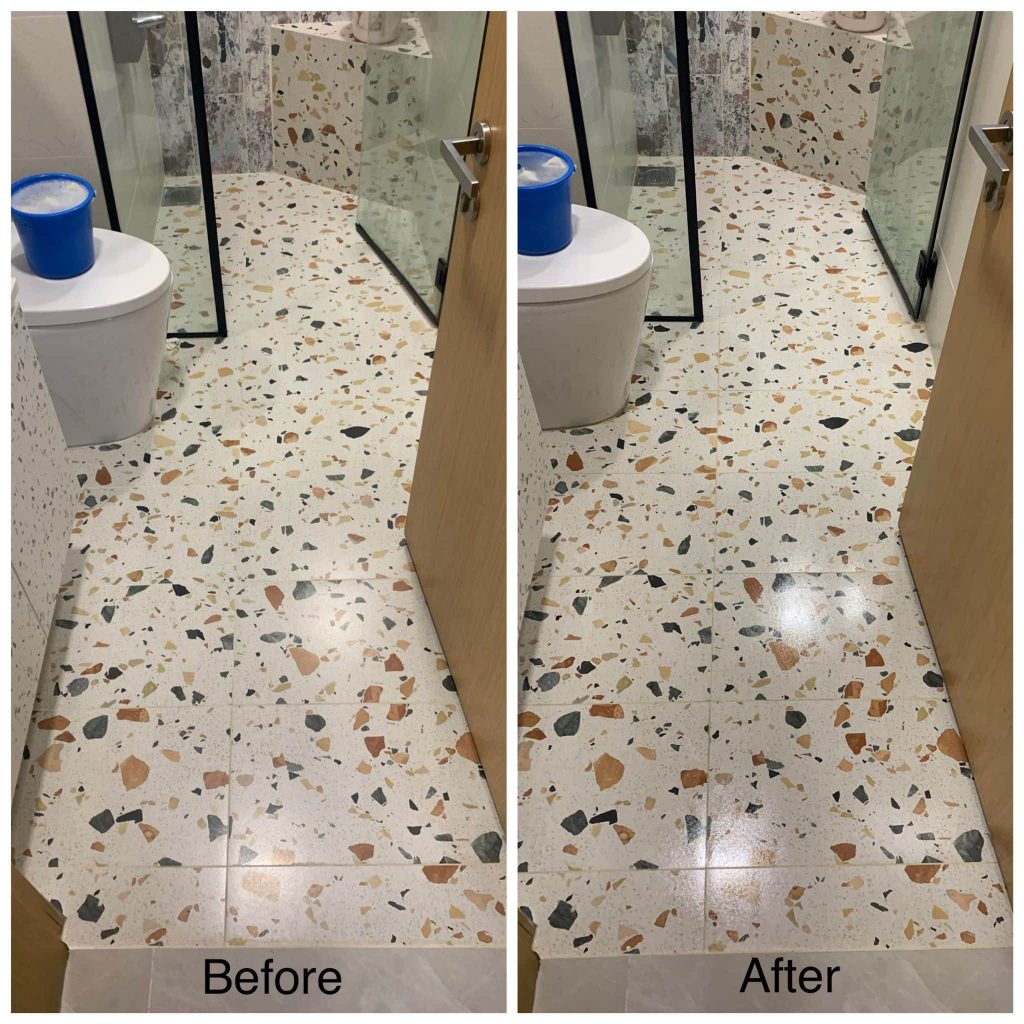
Epoxy Flooring Vs Anti-Slip Floor Treatment.
Epoxy Flooring Or Anti-Slip Floor Treatment Singapore. For Floor Safety.
Which Is Better Safety Floor Coating & Solutions. For Bathroom Tiles, Toilet Flooring and Shower Floors.
Epoxy Flooring – Slippery Floors.
Slippery floors are one of the biggest safety risks in homes and commercial buildings. Bathrooms, toilets and shower areas become even more dangerous. When water and soap make the floor slick.
Many HDB or private property owners consider two common solutions: epoxy flooring. Such as (epoxy paint, epoxy flakes overlay or floor coating) and anti-slip floor treatment. While both improve flooring, they work in very different ways and are designed for different purposes.
In this guide, we’ll compare epoxy flooring and anti-slip floor treatment to help you choose the best anti-slip flooring option for your space.
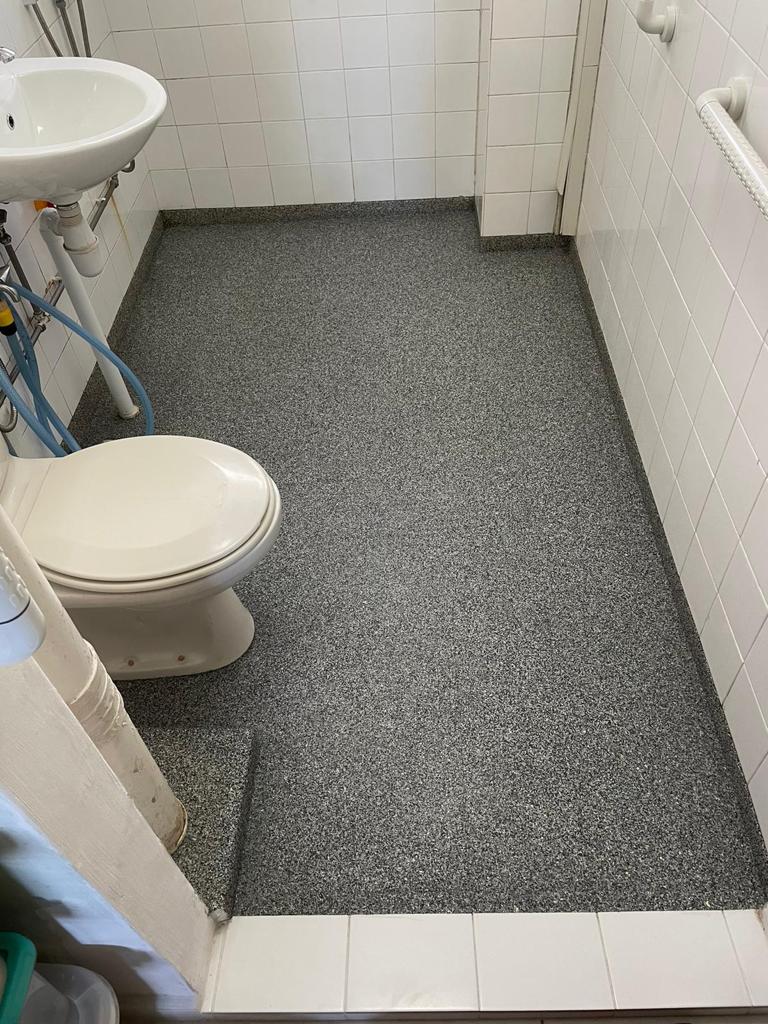
What Is Epoxy Flooring?
Epoxy flooring is a protective coating made by combining resin and hardener. The mixture creates a strong, seamless surface that bonds to concrete, floor tiles and other prepared substrates.
Epoxy flooring is popular in.
1. Warehouses.
2. Factories.
3. Commercial kitchens.
4. Car parks.
5. Workshops.
6. Industrial facilities
It is valued for its durability, chemical resistance and easy maintenance.
Advantages of Epoxy Flooring.
A. Strong and long-lasting.
B. Resistant to chemicals and stains.
C. Easy to clean.
D. Available in many colours and finishes.
E. Creates a seamless appearance.
F. Waterproofing.
Disadvantages of Epoxy Flooring.
A. Requires professional installation.
B. Existing tiles usually need to be heavily prepared.
C. Can become slippery when wet. Unless anti-slip additives or anti-slip coating are included.
D. Installation can be time-consuming.
E. Repairs may require recoating sections.
What Is Anti-Slip Floor Treatment?
Anti-slip floor treatment is a chemical process. That improves the grip of existing floor surfaces without changing their appearance.
Instead of adding a coating, the treatment creates microscopic pores on the tile surface. These tiny changes increase traction when the floor becomes wet. It can be done with spray or hands-on application.
The treatment is ideal for.
1. Bathroom tiles.
2. Toilet floors.
3. Shower areas.
4. Kitchen tiles.
5. Swimming pool surrounds.
6. Hotel bathrooms.
7. Healthcare facilities.
Unlike epoxy floor coating, anti-slip treatment keeps your original tiles. While making them safer.
Epoxy Flooring vs Anti-Slip Floor Treatment.
1. Installation For Epoxy Flooring.
A. Often requires removing or preparing the existing floor.
B. Several application stages are needed.
C. Drying and curing may take several days.
Anti-Slip Floor Treatment.
A. Applied directly to existing bathroom tiles.
B. Minimal disruption.
C. Most areas can be used again within a few hours.
Anti-slip floor treatment is faster for installation.
2. Slip Resistance.
This is the most important factor for wet areas.
Epoxy flooring can be slippery when water. Soap or shampoo is present. Although anti-slip aggregates can be added. Or non-slip coating are applied. The finish may still become less effective as it wears over time.
Anti-slip floor treatment is specifically designed to improve grip on soapy, wet tiles. It increases slip resistance without making the surface feel rough or uncomfortable.
Anti-slip floor treatment is highly recommended. If flooring are in good conditions.
3. Appearance.
Epoxy flooring completely changes the look of the floor.
If you have attractive bathroom tiles that you want to keep. Epoxy floors may not be the best choice.
Anti-slip treatment preserves the original colour, texture and design of your tiles.
Epoxy Flooring – Maintenance & Cost.
4. Durability.
Epoxy flooring performs well in heavy industrial environments with forklifts. Machinery and high traffic. Provided with good surface preparation and experts installation.
Anti-slip floor treatment is designed for pedestrian traffic and remains effective with proper maintenance.
For bathrooms, toilets and showers, industrial-grade flooring is usually unnecessary. Both are durable and long-lasting.
5. Maintenance.
Both options are easy to clean.
However, epoxy coatings may eventually scratch, peel or require recoating. Future removal works may require.
Anti-slip treated tiles only require normal cleaning with suitable products. No future defects cost required for removal.
Non-slip treatment is highly recommended for most residential bathrooms.
6. Cost.
Epoxy flooring generally costs more because of surface preparation. Multiple coating layers. Longer installation time and higher labour costs.
Anti-slip floor treatment is usually more affordable because existing bathroom tiles remain in place.
Anti-slip floor treatment is more cost-effective and hassle-free.
Which Solution Is Best for Bathroom Tiles?
If your bathroom tiles are in good condition but become slippery after getting wet. Anti-slip floor treatment is usually the better choice.
It provides.
A. Better grip.
B. Faster installation.
C. Lower cost.
D. No need to replace tiles.
E. Minimal change to the appearance.
Epoxy flooring is better suited for outdoor areas, industrial or commercial environments. Where performance is more important than preserving existing finishes.
Epoxy coating is an excellent choice. For environments where regular cleaning and housekeeping may not always be possible.
Best Choice for Toilets and Shower Areas.
Toilet and shower floors are exposed to water every day.
Soap, shampoo and cleaning products can make even textured tiles slippery.
An non-slip floor treatment helps improve safety. Without affecting the design of your bathroom. A professionally applied anti-slip treatment or coating is designed to improve slip resistance. While still allowing normal brushing and cleaning. Unlike thick coatings or textured overlays. That trap dirt, stains and bath elements. Making it easier to maintain good hygiene and slip resistance with routine cleaning.
This makes it an excellent solution for:
1. Family homes.
2. Hotels.
3. Aged care facilities.
4. Schools.
5. Shopping centres.
6. Restaurants.
7. Offices.
Benefits of YHH Floor Safety Solutions.
Choosing YHH means choosing a complete floor safety Singapore specialist. Our anti-skid solutions offer.
1. Improved slip resistance.
2. Long-lasting performance.
3. Solutions for almost every flooring material.
4. Residential and commercial applications.
5. Indoor and outdoor protection.
6. Minimal disruption during application.
7. Cost-effective alternative to replacing flooring.
8. Professional installation by experienced technicians.
Why Choose YHH?
YHH specialises in customised floor safety solutions. Rather than using a one-size-fits-all approach. We assess each surface and recommend the most suitable system. Whether it is for different tiles or other floor materials.
A. Nano anti-slip floor treatment.
B. Anti-slip paint.
C. Anti-slip spray coating.
This ensures the best combination of safety, durability and appearance.
Industries We Serve.
Our floor safety services are trusted by homeowners. Commercial buildings, hotels, shopping malls. Restaurants, schools and childcare centres. Hospitals, nursing homes. Factories, warehouses and offices. Swimming pools, sports facilities and government buildings.
YHH – Your One-Stop Safety Flooring Specialist.
If you are looking for professional floor safety Singapore services. YHH offers complete non-slip solutions for residential. Commercial and industrial properties.
From nano anti-slip floor treatment for bathrooms and kitchens. To anti-slip paint and spray coatings for wood. Composite decking, parquet. Acrylic bathtubs, fibreglass, metal. Epoxy flooring, polyurethane flooring and APCC coating systems. We help make every step safer.

🌟Well-rated with glowing five-stars non-slip treatment reviews.
Best Blog & Posts.
How To Prevent Slippery Floors.
Tips To Maintain a Cleaner Anti Slip Tiles.
Importance Of Slip, Fall and Trips Hazards.
How To Choose Slip Resistance Floor.
Best Suitable Floor Coating Singapore, Floor Spray.
Bathroom Flooring Singapore. Toilet Floor Paint Renovation.
What is Epoxy Flakes Flooring & Epoxy Coating.
Types of Epoxy Floor, Floor Painting & Spray.
Non-Skid Marble Treatment. Granite, Glazed & Gloss Tiles.
Why Non-Skid Coating is A Must For Bathrooms?
Anti Slip Flooring For Dogs, Pet-Friendly Non-Slip Ideas.
Actress Joanne Peh injured her back after slipping in the bathroom.
Former WP chief Low Thia Khiang conscious and recovering in icu after fall at home.
Frequently Asked Questions.
Does anti-slip floor treatment change the colour of bathroom tiles?
No. A professional treatment keeps the original appearance of most ceramic and porcelain tiles while improving grip.
Can epoxy flooring be used in a shower?
Yes, but it must include anti-slip additives. Or anti-slip coating. Even then, it may not provide the same wet slip resistance as a anti-slip treatment. Designed specifically for tiled shower floors.
Is anti-slip treatment permanent?
A quality treatment can last for years. Depending on the tile type, traffic levels and cleaning routine.
Which option is more suitable for residential bathrooms?
For most homes, anti-slip floor treatment is the preferred choice. Because it improves safety without replacing existing bathroom tiles. Easier to maintain. Will not peel, chip or wear off.
YHH PLUS ENTERPRISE.
Address: 58 Ripley Crescent Singapore 556234.
Email: sales@antislipsolution.sg
 Hi, click Whatsapp us below, we will respond asap
Recent Comments